
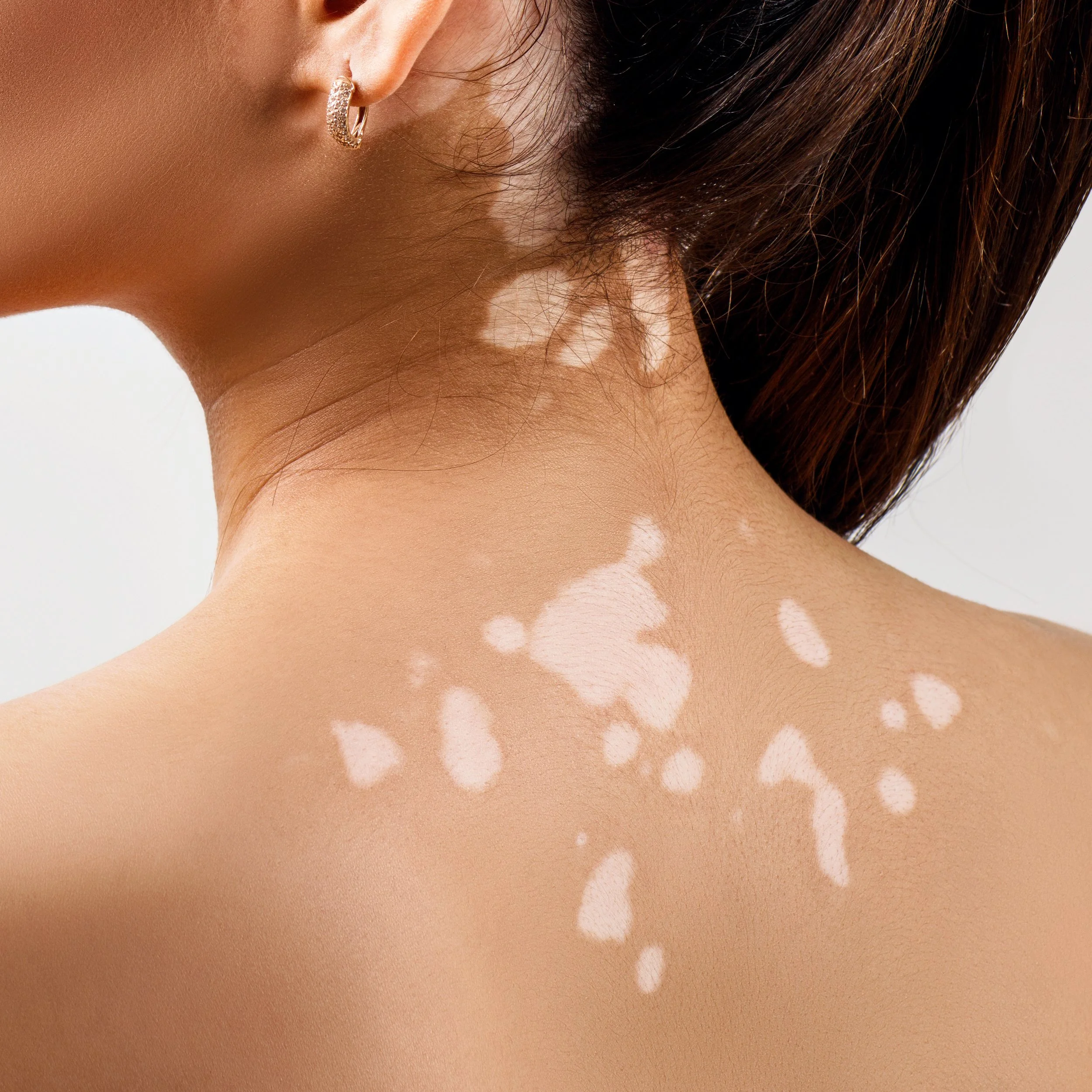
Vitiligo
A CHRONIC AUTOIMMUNE CONDITION CAUSING LOSS OF SKIN PIGMENTATION IN PATCHES.
It occurs when the immune system mistakenly attacks the melanocytes (pigment-producing cells), leading to white or light-colored patches on the skin.
White or hypopigmented patches on the skin,
Premature whitening of scalp hair, eyelashes, or eyebrows,
Loss of pigment on lips and inside the mouth,
Symmetrical or asymmetrical patch formation,
Increased sensitivity to sun in affected areas
Symptoms
Treatments
❋ Topical SteroidsHelp reduce autoimmune inflammation in active patches and slow pigment loss.
Effective for early, localized vitiligo when used under medical supervision.
❋ Topical Calcineurin InhibitorsModulate the immune response without side effects of steroids. Useful for sensitive areas like the face, neck, and folds.
❋ 5-Fluorouracil (5-FU)Stimulates repigmentation by altering immune activity when applied to small patches. Often combined with procedures or phototherapy for improved results.
❋ Oral SteroidsShort courses help control rapid spreading or unstable vitiligo. Used to stabilize disease activity before other therapies.
❋ Oral ImmunosuppressantsReduce immune system overactivity to prevent progression in resistant cases.
Prescribed selectively based on patient health and extent of vitiligo.
❋ Narrowband UVB (NBUVB)Gold-standard light therapy that activates melanocytes and promotes pigment return.
Requires multiple sessions for gradual repigmentation.
❋ Cellular Grafts (Melanocyte Transfer)Transfers pigment-producing cells to stable vitiligo patches. Suitable for areas unresponsive to medication or light therapy.
❋ Punch GraftsSmall skin grafts implanted into depigmented areas to seed new pigment.
Used in stable, localized vitiligo for targeted repigmentation.
❋ Semipermanent Makeup (Micropigmentation)Medical tattooing to camouflage visible patches for cosmetic improvement.
Ideal for stable areas like lips, eyelids, or small facial zones.
FAQs
-
No. Vitiligo is not contagious and does not spread through contact, sharing items, or physical interaction.
-
There is no guaranteed cure, but treatments can control progression and promote repigmentation with consistent care.
-
In some cases vitiligo can progress; early treatment helps reduce the rate of spread and stabilize the condition.
-
A balanced diet supports immunity and skin health.
While diet alone cannot cure vitiligo, it can help improve treatment outcomes.