
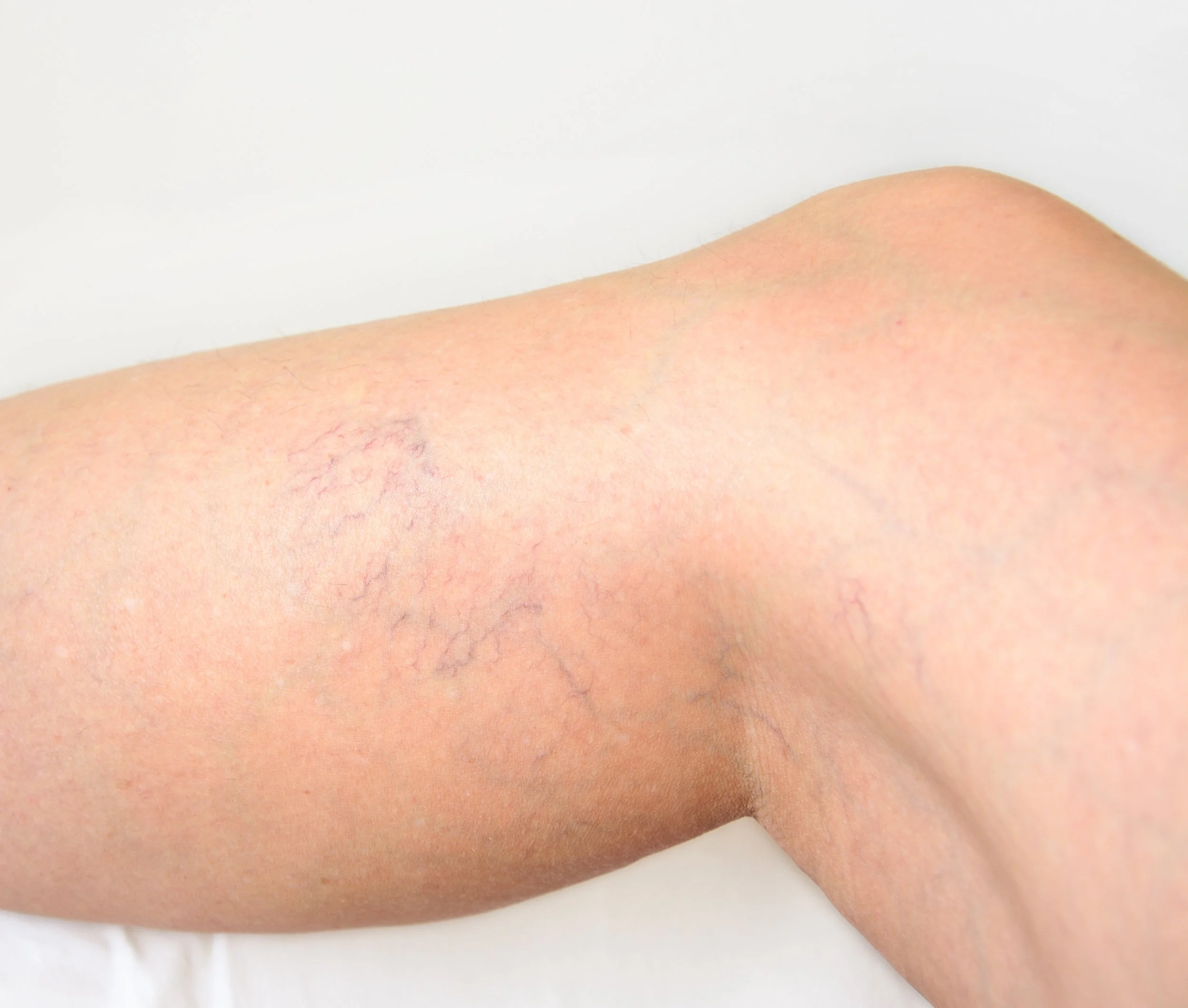
Spider Veins
VISIBLE, DILATED BLOOD VESSELS ON THE SURFACE OF THE SKIN APPEARING RED, BLUE, OR PURPLE AND RESEMBLING SPIDER WEBS.
They commonly occur on the legs and face and may be associated with burning sensation or discomfort.
Though often a cosmetic concern, they can sometimes indicate underlying venous issues.
Symptoms
Thin visible red blue or purple blood vessels,
Burning, stinging, or aching sensation in affected areas,
Heaviness or discomfort in the legs,
Worsening appearance after prolonged standing
Treatments
❋ SclerotherapyInjection of a solution into affected veins. Causes the vein to collapse and fade gradually. Highly effective for small to medium spider veins.
❋ Endovenous Laser AblationLaser energy seals the problematic vein from within. Redirects blood flow to healthier veins. Used for deeper or feeder veins.
❋ Radio frequency AblationUses heat energy to close abnormal veins. Minimally invasive with quick recovery. Performed in selected cases.
❋ Long Pulse Nd:YAG LaserTargets superficial spider veins non-invasively.
Safely heats and closes visible vessels.
Effective for both facial and leg spider veins.
❋ Vascular Surgeon InterventionRequired when spider veins are associated with deeper venous insufficiency. Ensures proper evaluation and definitive treatment. Often combined with cosmetic procedures for best results.
FAQs
-
Spider veins may occur due to:
Obesity
Family history
Pregnancy
Hormonal supplements
Prolonged standing
Aging
-
Though both share similar risk factors, they are not the same.
Varicose veins are larger, deeper, often painful, and usually require vascular surgeon intervention. -
Most spider veins are harmless and cosmetic.
However, evaluation is needed to rule out deeper venous disease. -
Spider veins do not disappear without treatment.
Early intervention gives better cosmetic and functional outcomes. -
Item description