
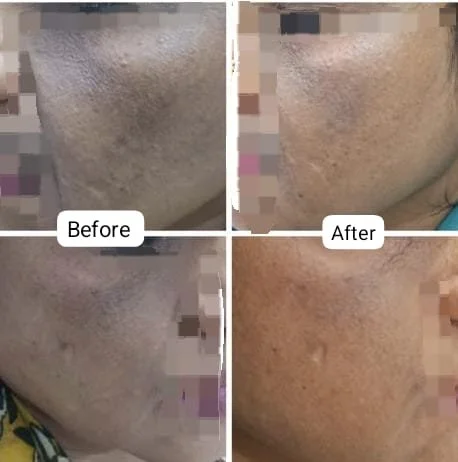
Pigmentation
Pigmentation occurs due to excess melanin deposition caused by dysfunctional melanocytes.
It can affect any part of the body, most commonly the face, neck, underarms, abdomen, and thighs.
Triggers include sun damage, hormonal changes, thyroid disorders, medications, hair-dye allergy, genetics, stress, aging, and post-inflammatory changes.
Dark patches or uneven skin tone on the face or body,
Brown grey or black spots that gradually deepen in color,
Pigmented areas after acne, injury, or rashes (PIH).
Symptoms
Treatments
❋ Diamond MicrodermabrasionGently exfoliates the top damaged skin layer using diamond-tip technology. Removes dead cells and brightens dull pigmented skin. Best for mild pigmentation and maintenance treatment.
❋ Chemical peels - Mild & IntenseSpecial acids remove pigmented superficial skin layers. Stimulate skin renewal and pigment lightening. Used for melasma, tanning, and post-acne pigmentation.
❋ Q-Switch ND:YAG LaserTargets pigment clusters with precise laser energy.
Breaks down melanin for natural clearance by the body. Highly effective for freckles, tattoos, and stubborn pigmentation.
❋ Long-Pulse ND:YAG LaserPenetrates deeper pigment deposits and vascular components. Improves deeper melasma and resistant patches. Safe for most skin types under expert supervision.
❋ MesotherapyMicro-injections deliver anti-pigment and brightening agents. Suppress melanin production and boost skin repair. Improves skin tone uniformity and radiance over multiple sessions.
❋ IV Glutathione TherapyPowerful antioxidant treatment to reduce melanin production. Enhances detoxification and supports skin brightening. Also improves overall skin clarity and glow.
❋ Over-the-Counter MedicationsIncludes creams with ingredients like vitamin C, kojic acid, and niacinamide. Helpful in mild pigmentation or as supportive therapy. Require consistent daily use and sun protection.
FAQs
-
Depends on the cause — pigmentation can be significantly lightened and controlled with ongoing treatments and sunscreen.
-
Laser therapy and chemical peels show the quickest visible improvement in most cases.
-
Yes, if sun protection and maintenance care are not followed, recurrence is common.
-
When performed by trained dermatologists with proper protocols, all treatments are safe and effective.