
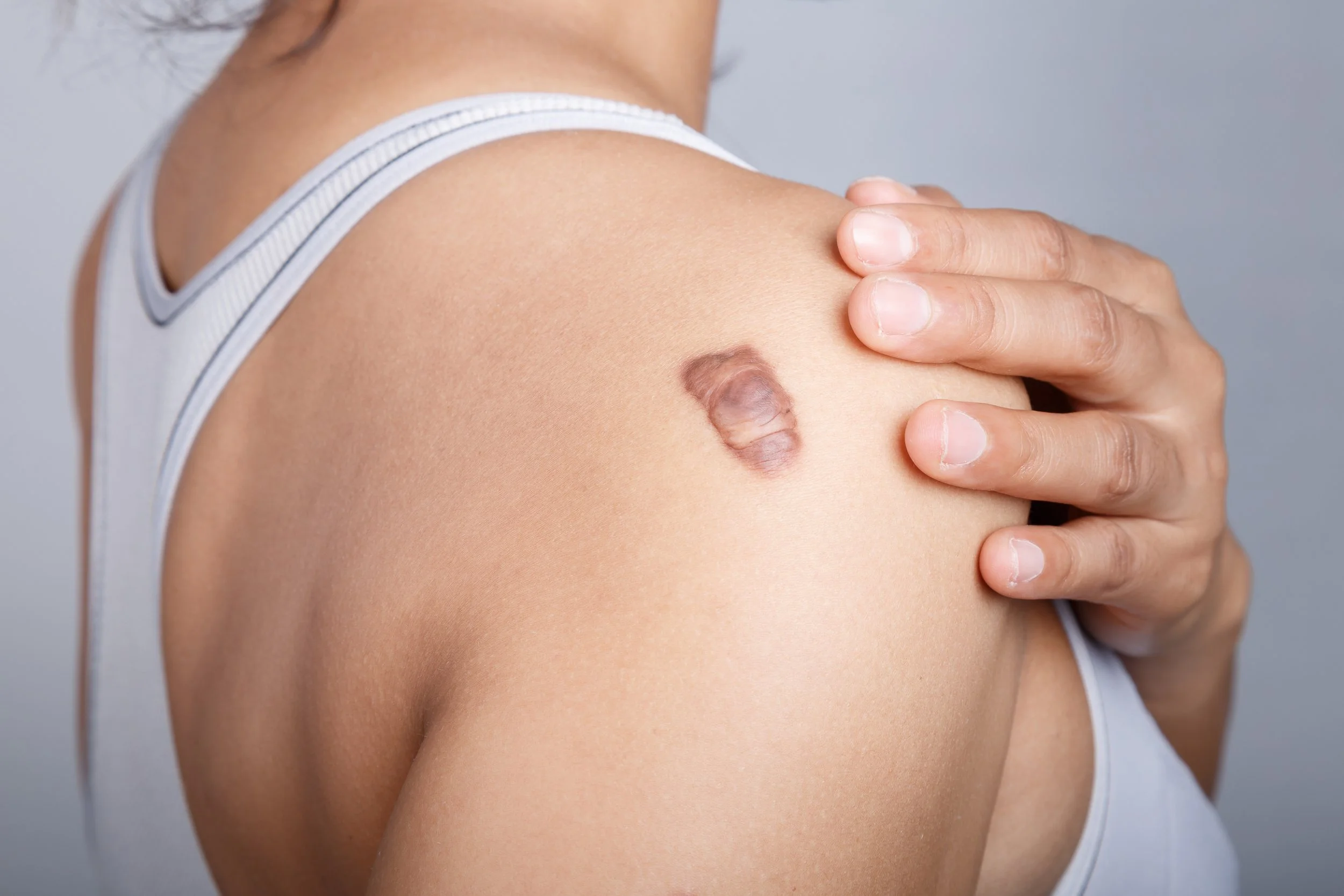
Keloid
Keloids are raised, thick scars that grow beyond the original wound due to excessive collagen production.
They may develop after surgery, acne, piercings, burns, or minor skin injuries.
Symptoms
Raised, hard, or rubbery scar tissue
Itching, tenderness, or pain over the scar
Red, pink, or dark-colored scar that may continue to grow
Scar extending beyond the original injury site
Treatments
❋ Steroid InjectionReduces inflammation and excess collagen to flatten and soften keloid scars.
Helps relieve itching, pain, and prevents further scar growth.
❋ Ablative Laser TreatmentPrecisely removes excess scar tissue while improving texture and redness.
Often combined with other therapies to reduce recurrence risk.
❋ Surgical ExcisionPhysically removes the keloid under controlled surgical conditions.
Usually followed by adjuvant therapy to prevent the scar from returning.
❋ CryotherapyFreezes keloid tissue to reduce its size and thickness over time.
Most effective for smaller keloids and often combined with injections.
❋ Silicone Gel & SheetsCreates a protective barrier that hydrates and softens scar tissue.
Helps flatten keloids and improves color with consistent daily use.
❋ Pressure TherapyApplies continuous pressure to limit collagen buildup in scars.
Commonly used after surgery or for keloids on ears and limbs.
❋ Topical Scar CreamsSpecialized formulations help improve scar texture and pigmentation.
Best suited for early or mild keloids and post-treatment care.
❋ Intralesional 5-Fluorouracil / BleomycinTargets abnormal scar cells to control aggressive or recurrent keloids.
Often used when steroid response is inadequate or recurrence is high.
❋ BotoxReduces skin tension around scars to improve healing outcomes.
Helps lower recurrence rates when used as part of combination therapy.
FAQs
-
Treatment depends on the size, location, and severity of the keloid, often requiring a combination approach.
-
Keloids can be significantly reduced, but complete removal may carry a risk of recurrence without proper follow-up care.
-
Most procedures involve minimal discomfort and are performed with numbing techniques.
-
Treatment duration varies and may require multiple sessions over weeks or months for best results.