
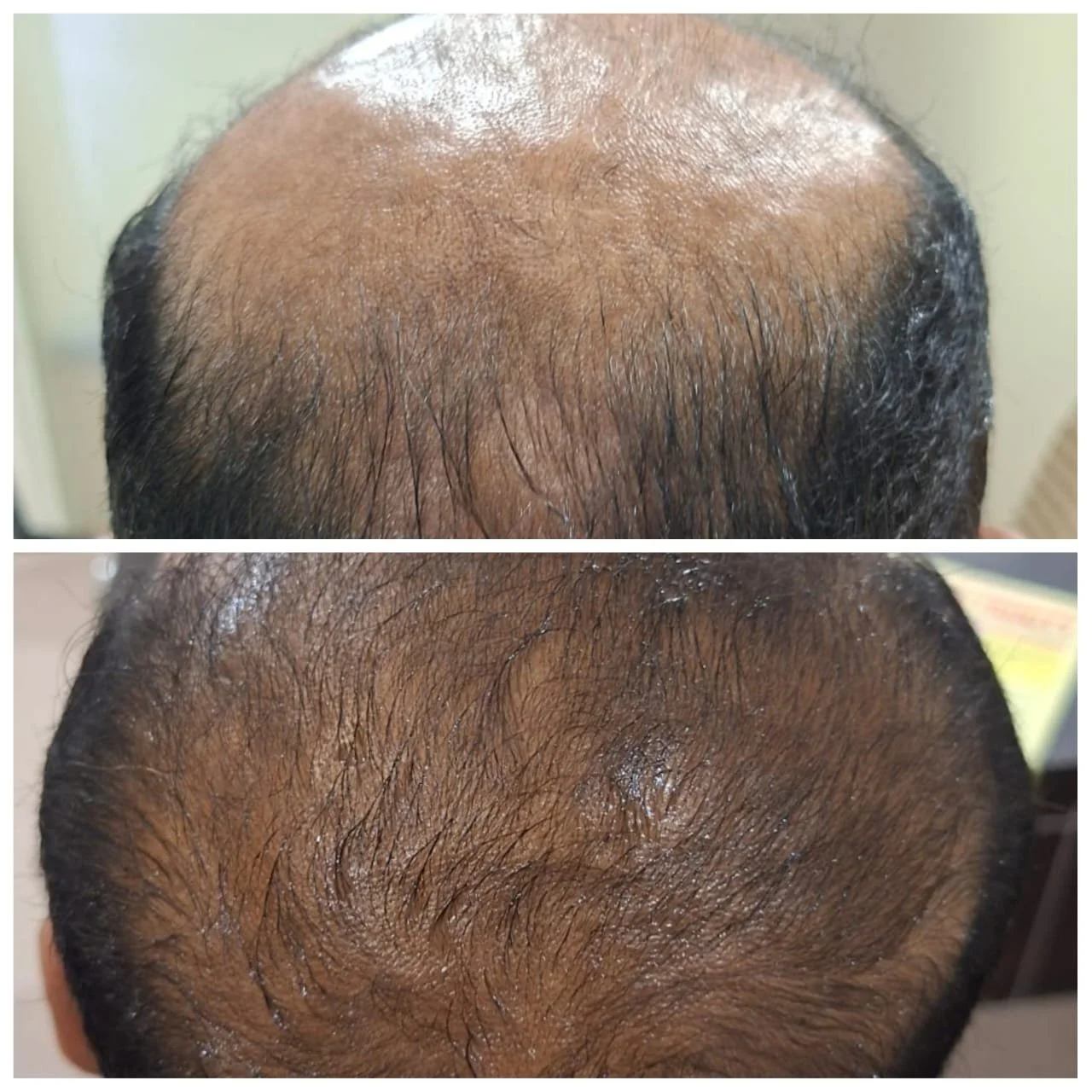
Hair Fall
A COMMON CONDITION WHERE HAIR ENTERS THE RESTING (TELOGEN) PHASE PREMATURELY, LEADING TO EXCESSIVE SHEDDING.
Normally, a healthy person loses up to 100 strands of hair per day.
In telogen effluvium, hair loss may increase to 200–300 strands per day.
Sudden increase in daily hair shedding,
Excess hair fall while washing or combing,
Noticeable thinning rather than patchy hair loss,
Reduced hair volume and density,
In severe cases, thinning of eyebrows or body hair
Symptoms
Treatments
❋ PRP / GFC TherapyUses growth factors to stimulate dormant hair follicles.
Improves hair strength and thickness. Supports faster recovery from excessive hair fall.
❋ MesotherapyDelivers vitamins, minerals, and growth factors directly to the scalp. Strengthens hair roots and reduces shedding. Enhances scalp health and hair regrowth.
❋ Diet ModificationCorrection of protein, iron, vitamin, and mineral deficiencies. Balanced nutrition supports the hair growth cycle. Essential for long-term recovery.
❋ Lifestyle ChangesStress reduction, adequate sleep, and regular exercise. Gentle hair care practices and trigger avoidance. Personalized guidance provided by the doctor.
❋ Hair TransplantationA surgical procedure that restores hair by transplanting healthy follicles from donor areas to thinning or bald regions. It provides natural-looking, long-term results with improved hair density and coverage.
FAQs
-
Yes. Stress, exhaustion, and lack of sleep are among the most important triggering factors for telogen effluvium.
Addressing stress is crucial for recovery. -
Yes, it is possible.
Hair dyes containing ammonia and parabens can increase hair damage and shedding, especially with frequent use.