
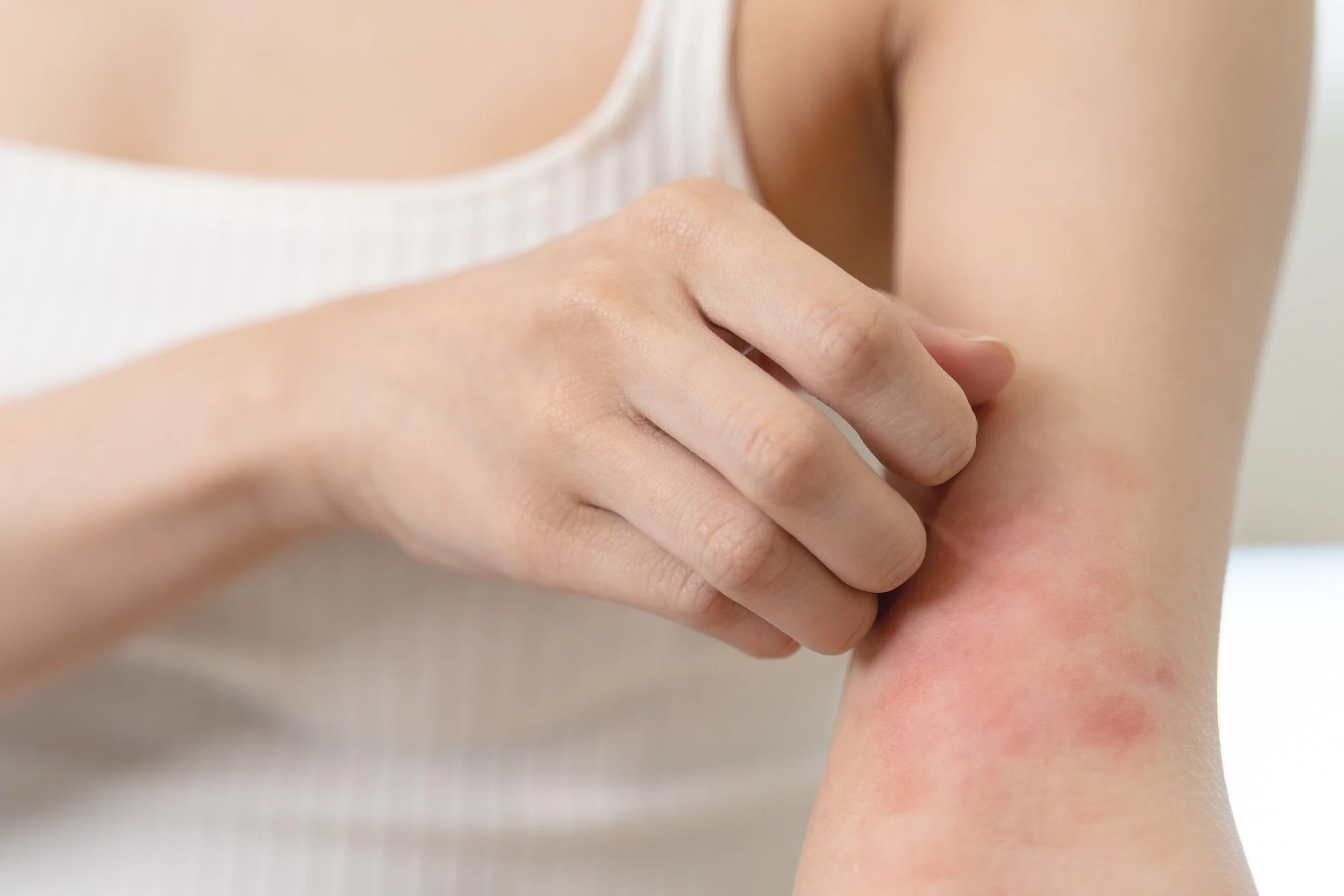
Atopic Dermatitis
INTENSE, CHRONIC, ITCHY SKIN CONDITION CAUSING DRY, SCALY SKIN WITH DISCOLORATION.
Occurs due to genetic mutations that weaken the skin’s protective barrier, allowing moisture loss and increased allergen entry.
Can affect infants, children, and adults, often presenting as recurrent flare-ups.
Persistent redness and inflamed skin patches,
Fissuring, thickened skin, and intense itching,
Oozing in acute flares and risk of secondary bacterial infection
Symptoms
Treatments
❋ Antibiotic CreamsUsed for secondary bacterial infections resulting from scratching. Reduce oozing and inflammation. Aid quicker healing during infected flares.
❋ Topical Steroidal PreparationsControl inflammation and reduce redness and itching.
Short courses are used safely under medical guidance. Essential for acute flare management.
❋ Topical Steroid-Sparing FormulationsNon-steroidal anti-inflammatory creams that control symptoms safely. Suitable for sensitive areas and long-term maintenance. Reduce dependency on steroid use.
❋ Barrier Repair Creams & LotionsDeeply hydrate and restore the damaged skin barrier. Prevent moisture loss and reduce flare frequency. Core daily therapy for all patients.
❋ Anti-Allergic MedicationsRelieve itching and prevent sleep disturbance. Help reduce allergy-triggered flares. Often prescribed short-term during acute phases.
❋ Light Therapy (Under Supervision)Medically controlled phototherapy for chronic or resistant cases. Reduces inflammation and immune overactivity. Performed safely under dermatologist guidance.
❋ Lifestyle Modifications & Home TherapiesTrigger avoidance, gentle skincare routines, and stress management. Wet-wrap therapy and controlled bathing techniques may be advised. Personalized guidance provided by Dr. Sindhu Priya for long-term disease control.
FAQs
-
When the rash worsens or spreads rapidly
If fluid begins oozing from the skin
When itching disturbs sleep or daily activities
-
Atopic dermatitis usually improves slowly with treatment.
Strict compliance with medications and lifestyle changes is essential for long-term control and prevention of relapses.