
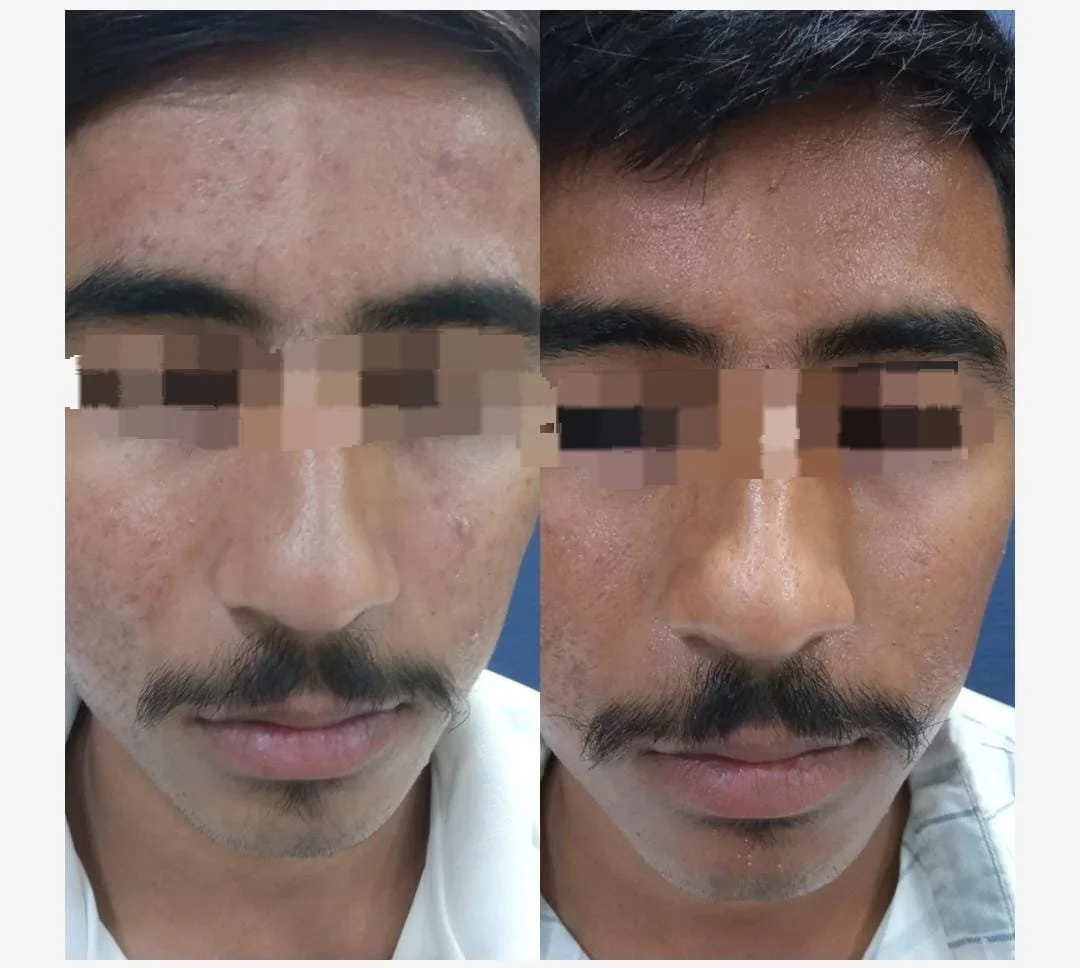
Acne Scars
Acne scars form when inflamed acne damages the skin’s collagen during healing.
They appear as depressed pits, rolling scars, box scars, ice-pick marks, or raised scars.
Early treatment improves results and prevents permanent texture changes.
Symptoms
Uneven skin texture with pits, dents, or raised areas,
Dark marks or redness that remain after acne heals.
Loss of smoothness causing visible facial irregularities under light.
Treatments
❋ Intense Chemical PeelsDeposits medical-grade acids to remove damaged skin layers. Boosts skin renewal and collagen production. Effective for pigmentation, shallow scars, and texture improvement.
❋ Microneedling + PRPFine needles create micro-injuries to stimulate collagen. PRP (platelet-rich plasma) enhances healing and skin regeneration. Improves acne scars, pores, fine lines, and overall skin quality.
❋ SubcisionReleases scar tissue tethering the skin downward. Elevates depressed scars by breaking fibrotic bands underneath. Best for rolling and deep scars.
❋ Scar SurgeryAn advanced laser treatment used for hair reduction, pigmentation, and vascular concerns. Safely targets deeper skin layers for effective, long-lasting results.
❋ Laser TreatmentUses controlled energy to resurface damaged skin layers. Promotes collagen regeneration and smoothens scars. Effective for texture irregularity, pigmentation, and pores.
❋ TCA CROSSHigh-strength TCA acid is applied directly inside deep scars. Stimulates collagen formation from scar base upward. Most effective for ice-pick and narrow box scars.
❋ PDO ThreadsBiodegradable threads lift depressed scars beneath skin. Boost collagen production while supporting scar remodeling. Improves skin firmness and texture.
❋ FillersInjectable fillers lift depressed acne scars instantly.
Restore volume and improve surface smoothness.
Results are immediate but temporary.
❋ BoostersSkin boosters hydrate deeply and stimulate collagen growth. Improve surface texture, elasticity, and glow. Used as supportive therapy with other scar treatments.
FAQs
-
Severe scars cannot be erased fully, but multiple treatments can reduce them up to 70–90%.
-
There is no single best option - treatment depends on scar type and depth (laser, subcision, microneedling, etc.)
-
Most patients need 3–6 sessions across different procedures for optimal results.
-
Mild discomfort is expected; treatments are safe when done by qualified dermatologists with proper aftercare.